Kanzlian Prowlers
 Size comparison of three most popular Kanzlian Prowlers | |
| Kingdom | Animalia |
|---|---|
| Phylum | Chordata |
| Class | Actinopterygii |
| Order | Anguilliformes |
| Suborder | Prowlididei |
Kanzlian Prowlers, or Prowlididei, are a suborder of eels whose members are found exclusively around the waters of Kanzlia. There are two distinct families in the suborder, though there are approximately just 5 species in total and are almost exclusively marine. Of the 5 species still alive, only 3 are known to have stable wild populations.
The name prowlers most likely stem from old Kanzlian mythological texts which first described the eels as prowlers due to their hunting habits and tendency to wreck ships at night. The name stuck ever since.
Families
The Prowlididei contains two distinct families and one known extinct family:
- Family Thalassoskotidae (Seaprowlers)
- Family Bathyscryptidae (Lowprowlers)
- Family Xyphinidae (Swordprowlers) (Extinct)
Anatomy
With the exception of the Seaprowlers whose dorsal fins splits in two, The dorsal fins runs long the back and joins seamlessly with the caudal and anal fins. Their eyes are relatively small and they rely mostly on their sense of smell to ambush prey.
The body is generally patterned but as they get older the pattern slowly fades. Their jaws are wide with large teeth to tear flesh with the exception of the Yellow-striped seaprowler, the only alive species to hunt crustaceans. Kanzlian Prowlers secretes a protective mucus over their smooth scaleless skin which whilst tasting sweet and completely harmless several hours after production, is mildly toxic for humans, at worst only causing severe abdominal pain. This suggests their mucus is a potent toxin that the prowlers secrete when they feel threatened. Their skins are much thicker than that of Moray eels but their mucus production is significantly lower than that of moray eels.
Feeding behaviour
Kanzlian Prowlers are opportunistic carnivorous predators and feed primary on fish with the Yellow-striped seaprowlers the only exception as they also consume crustaceans. The giant seaprowler has been observed hunting tunas. Cannibalism has been observed only on the Lowprowler family but especially rare. Large species of fish like tuna, barracudas, and groupers are known to hunt smaller members of the suborder, but due to the toxic mucus, Kanzlian prowlers are mostly left to their own devices. This makes Kanzlian Prowlers (except the Yellow-striped seaprowlers) to be the apex predators in their ecosystems.
Habitat
Kanzlian Prowlers can be found in both freshwater habitats. However, Kanzlian Prowlers are able to swim up freshwater rivers to breed. The Seaprowlers can be found in shallow water nearshore areas, and mesopelagic zones of the ocean in cold waters. Lowprowlers meanwhile are found in much deeper waters, though occasionally hunts in shallower waters.
Species
Thalassoskotus flavolineatus
The Thalassoskotus flavolineatus, better known as the yellow-striped seaprowler, are well known for its yellow striped running from behind their eyes all the way to their caudal fins. The rest of their body is pinkish silver with green colouration on the upper half of their body. Their fins, including their anal fins, are green in colour. As a carnivorous eel, they hunt smaller fish and crabs, developing relatively thicker teeth than other Kanzlian Prowlers.
A notable curiousity with the yellow-striped seaprowler is their longevity. Documented specimens have been know to reach up 100 years of age, defying typical aging processes. This may be attributed to their genes which displays remarkable effectiveness in repairing damaged tissues, and overall slowing down cellular damage. Interestingly however, the yellow-striped seaprowler is especially vulnerable to disease which may be attributed to their remarkably weak immune systems. Populations of yellow-striped seaprowlers have been observed to be decimated quickly by disease.
Thalassoskotus maximus
The Thalassoskotus maximus, better known as the Giant seaprowler, is the largest known living or extinct member of the Kanzlian prowlers. Reaching lengths up to 10 meters, the Giant seaprowler serves as the apex predators of their ecosystems. They are characterised by its massive, dark-colored body. Similar to the yellow-striped seaprowler, they are generally pinkish silver with green colouration on the upper half of their body. It's diet consists of large fish such as tuna and even other species of Kanzlian Prowlers, notably the red-tailed lowprowlers. Their muscular body, strong jaw bones, and sharp teeth allow them to rip through flesh with ease.
Despite this, the Giant seaprowlers demonstrates a remarkable curiousity and borderline friendliness towards humans. Unlike many apex predators, Giant seaprowlers have demonstrated genuine curiousity and docileness when observed by humans, often sticking their eyes out of the water. This behaviour remains unexplained, but its theorised that due to the Giant seaprowlers dominance on top of the food chain for thousands of years they lost the ability to perceive external threat, and likely view humans as an odd looking unreachable fish.
Bathyscryptus erythrocauda
Better known as the red-tailed lowprowler, these species of prowlers can be easily identified by their striking red fins. These lowprowlers can reach up to 4 meters long and lives in deeper waters than their seaprowler counterparts, though they occasionally head to shallower waters. They typically hunt other fish such as trout and catfish. Its striking appearance differs between male and females. Male red-tailed lowprowlers can be identified by their red hues on their tails distributed on both the upper and lower half of their fins. Female red-tailed lowprowlers meanwhile only have red hues on the lower half of their fins.
Not much is known about the red-tailed lowprowlers behaviour, beside the fact they are observed to chew on random things from tires to the tails of whales.
-
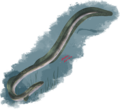
Adult Yellow-Striped Seaprowler
-
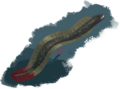
Male Red-Tailed Lowprowler
-
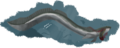
Adult Giant Seaprowler


Relationship with humans
Kanzlian Prowlers have unique relationships and behaviours with humans. Perhaps most notably, the Giant Seaprowlers friendliness towards humans and this allows the giant seaprowler to command a lot of admiration and respect from Kanzlian fishermen. The same can not be said for the red-tailed lowprowlers who is notorious for ripping apart fishing nets. As a result, in the early 1930s, a large scale campaign to hunt the red-tailed lowprowlers to extinction commenced. The population was nearly driven to extinction until the government intervened and the monarchy condemned the campaign. Their populations have recovered since. Since 1979, Giant Seaprowlers and the Red-tailed lowprowlers are protected by law, and hunting them may result in huge fines and prison sentence.
Consumption
Due to the toxic mucus Kanzlian prowlers secrete and the fact that 2 of the 3 most popular species of prowlers are protected, they arent much of a delicacy icon in Kanzlia. Except for the yellow-tailed seaprowler which is immensely popular due to their weak toxin mucus but also said mucus marinating the prowlers flesh with relatively high concentration of glycogen. This makes the meat much sweeter and removes any fishy odor. They however are one of the most expensive fish per pound in the market.
Extinct prowlers
The Xyphinidae family of Kanzlian Prowlers, due to their especially sharp fins, was notorious for cutting nets and hands of fishermen handling them. They were hunted to extinction by the late 19th century, their corpses fed to livestock. The ecological impact of their extinction was profound as invasive species of carp, who was kept under control by the swordprowlers, exploded in numbers and caused severe ecological damages. It was only under control when carp was nearly hunted to extinction in Kanzlian waters. This ecological damage was one of the primary driving factors in the government to save the red-tailed lowprowlers.